
A few years ago, I eagerly accompanied my husband on a business trip to London. Our client graciously arranged for us to stay in a luxurious hotel with a business-class floor, where guests were treated to an unforgettable breakfast buffet. Among the offerings were three European fish delights: smoked salmon, herring, and kippers, each adding a touch of European charm to the morning meal—a true delight for someone like me whose favorite food is fish.
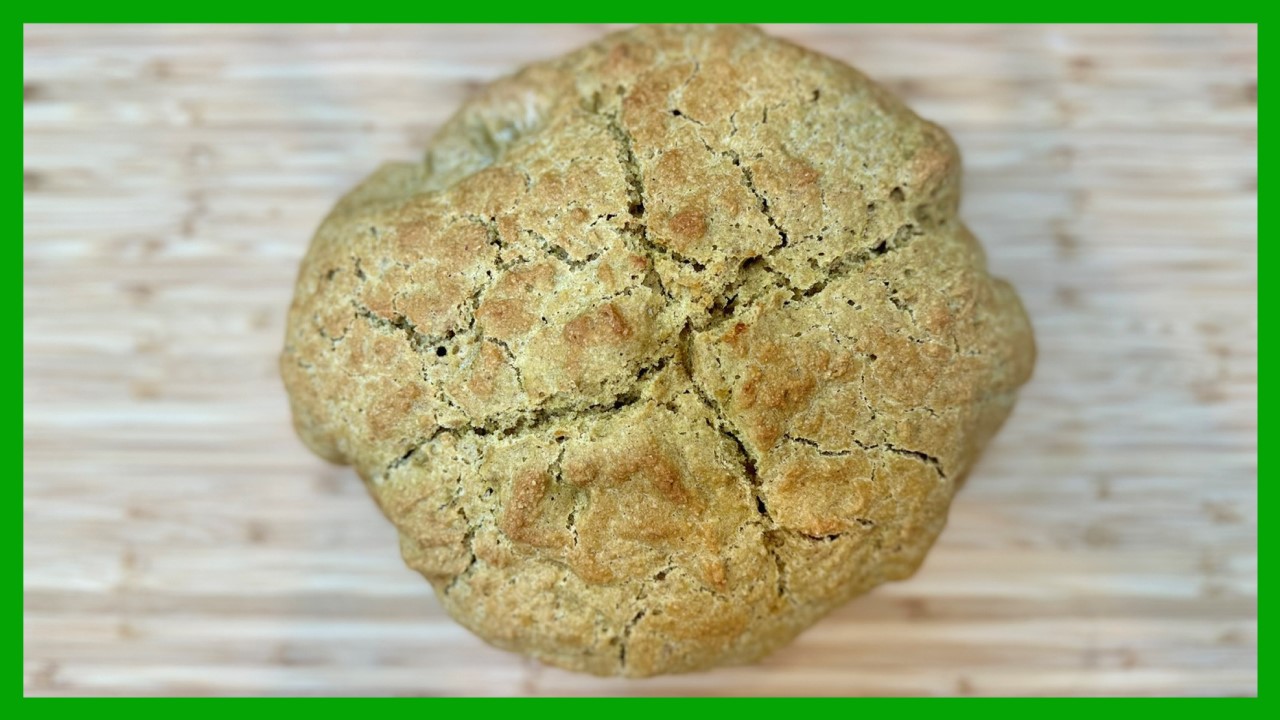
My top pick from the buffet was the smoked salmon, generously laid on rustic brown bread, creating a heavenly combination that left a lasting impression. This experience inspired me to replicate the flavors at home. In my quest, I stumbled upon a recipe for Irish brown soda bread that intrigued me with its leavening process involving a rye scald, soda and buttermilk.
What Sets This Recipe Apart?
This recipe (developed by Andrew Janigian) incorporates a distinctive rye scald, employing an ancient European breadmaking technique to prevent bread from going stale— a method that has proven effective! You can delve into more details and watch a video about it here. It’s worth noting that Yudane, a Japanese variation of scalding, involves pouring boiling water over flour. Breads made using the Yudane method may stay fresh longer compared to Tangzhong, an Asian technique that entails cooking the flour to create a roux.
Andrew Janjigian’s recipe is a versatile canvas for experiments. The original bread recipe is exceptional, and the recipe suggests trying savory mix-ins like cheddar and chives, or sweet combinations with chocolate chips and orange zest to elevate its appeal. While I haven’t tested these variations yet, the idea of enhancing the recipe further is intriguing.
Fueled by the delightful breakfast offerings, my husband and I spent a week exploring London’s iconic sites. From the historic Tower of London to leisurely strolls along charming streets and delightful evenings spent dining at local pubs, each day was filled with new experiences and the creation of lasting memories. This business trip turned into a pleasing blend of work and exploration, with the savory discoveries enhancing our journey through the heart of London.


Irish Soda Bread, known as arán sóide in Irish, is a traditional and quick-to-make bread that doesn’t require yeast but uses baking soda as the rising agent. This makes it an excellent choice for those who want to venture into homemade bread without the lengthy process associated with yeast-based varieties.
The dough for this bread does not need proofing, allowing for straightforward preparation. It is not only time-efficient but also delivers a delicious taste that appeals to various preferences.
I personally enjoy it lightly toasted with butter and honey or paired with dark chocolate tahini. Its savory nature makes it a versatile choice, complementing this creamy French parmesan soup I made recently or serving as a delightful base for my favorite breakfast sandwich with salmon, cream cheese, and capers.


For those who may not have buttermilk readily available, making your own is easy (see here). While some recipes may use an egg wash for a golden color, I found it unnecessary for this particular bread.
As for tradition, making a cross with a knife on top of the loaf is a common practice, although not mandatory. The taste remains unchanged, offering flexibility to suit individual preferences.
For more bread baking resources, here are two fun ones here and here.

IRISH BROWN SODA BREAD: RYE SCALD METHOD
Ingredients
Equipment
Method
- Preheat your oven to 425℉/204℃ with bread pan or Dutch oven inside.
- Whisk together 240g whole-wheat flour, 140g all-purpose flour, 12g sugar, 7g baking soda, 7g wheat germ (if using), and 4g salt. Sift out any clumps of baking soda. Set aside until ready to use. Place a sheet of parchment on the side of your workspace to use later.
- Place 40g rye flour in a large bowl and cover with 80g boiling water. Stir mixture together with a rubber spatula until a thick paste forms. Transfer paste to the bowl of a blender along with 363g buttermilk and 15g vegetable oil. Blend on medium-low speed until uniform, then transfer the mixture back to the bowl.
- Using a rubber spatula, stir the dry ingredients into the buttermilk mixture until just combined and no dry flour remains. Using a flexible dough scraper or rubber spatula, form the dough into a round ball at the bottom of the bowl, then transfer it to the center of the parchment. Using light-moistened hands, gently round and smooth the dough into an even, tall 10-inch-wide round (do not press down on the dough). Using the moistened edge of a scraper, gently score a ½-inch-deep cross into the top of the loaf.
- Transfer the loaf on the parchment to the bread pan or Dutch oven and cover it with the lid. Reduce oven temperature to 400℉/205℃. Bake soda bread, covered, until golden brown, about 30 minutes, Remove lid and continue to bake for an additional 5 minutes.
- Remove loaf from the bread pan or Dutch oven and allow to cool 30 minutes before slicing and serving.
- Enjoy warm with butter and jam, butter and a bowl of soup, or make an open-faced sandwich. This soda bread is best consumed on the day it is made, though it will toast up nicely for up to 3 days.
So, what are you waiting for? Make this bread today. And then post your review of it in the comments section below. :)Robin